
The advances in technology for banking have significantly automatized bookkeeping. However, anyone who deals with financial records knows that the automated system doesn’t always perform as expected. Feeds from banks stop working, and historical transactions aren’t always available or the clients are still sending statements as PDFs. This means that someone needs to alter a PDF document designed for reading into something that accounting software actually uses.
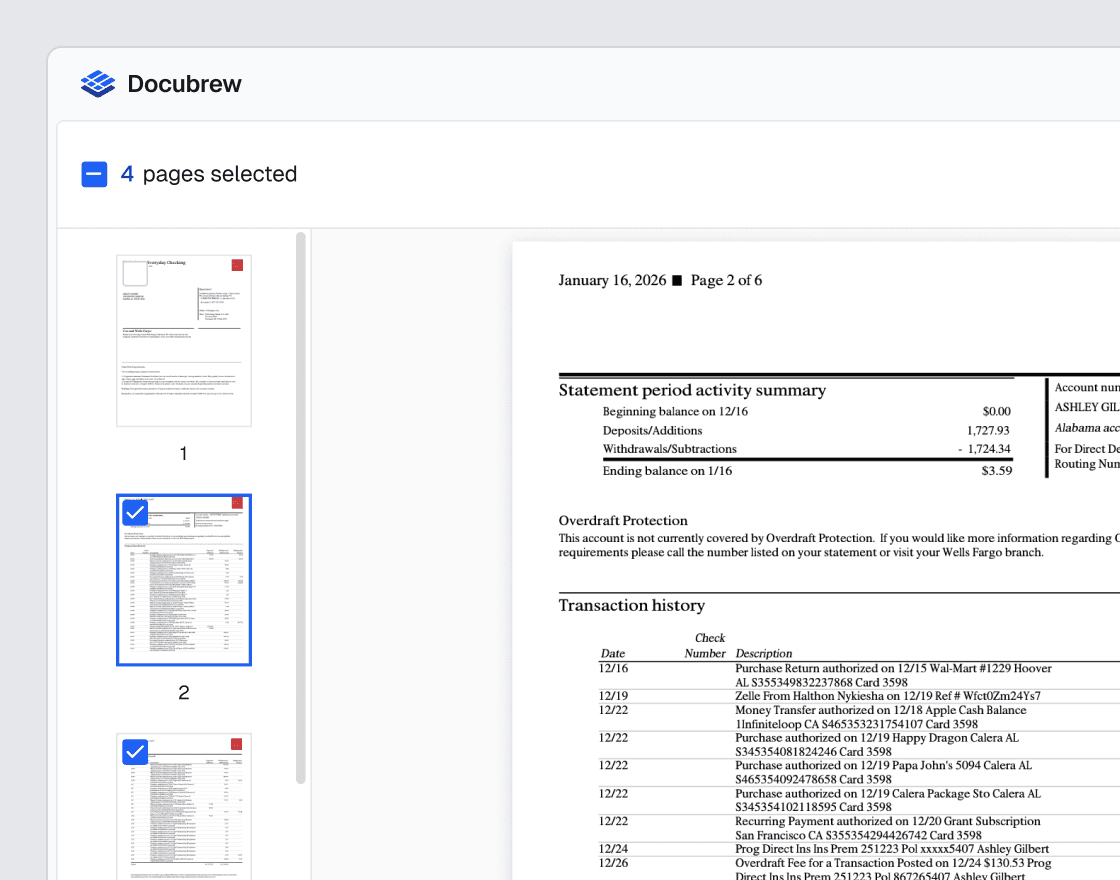
Image credit: docubrew.com
A bank statement converter can decrease the amount of repetitive work required. Instead of manually entering dates description, withdrawals, and deposits row-by-row, Docubrew converts information from the statement into structured spreadsheet-ready data.
When a PDF Becomes the missing piece
Imagine a bookkeeper preparing the year-end reconciliation of a new client. The accounting platform has recent transactions, however some old months are not present. The client had downloaded the original PDF statements.
It used to take long hours of tedious copying an Excel spread sheet. A bank statement in PDF format to Excel workflow offers a better option. Docubrew collects data about transactions from paper-based statements that are scanned, or PDFs that are digital.
For professionals who regularly need to move a bank statement to Excel, reducing manual transcription also removes an unnecessary opportunity for typing errors.
Keep the Pages that Matter
The bank statements aren’t just composed of transactions. A 12-page account statement may contain a cover page, account summary and disclosures or notices along with a number of pages of banking activity.
Docubrew lets users preview the document before deciding on the relevant pages before conversion. It is simpler to convert statements from bank accounts to Excel because the contents that are not related to the bank account of the account statement are not included in the working data.
The final file is ready to be used using accounting platforms like QuickBooks, Xero and FreshBooks.
CSV Provides a Flexible Accounting Workflow
CSV can still be useful, as it’s widely supported by databases and spreadsheets. Accounting applications also support CSV. If you need an account statement converted to CSV, Docubrew produces structured output based on the transactions table found within the report.
The same workflow is able to help firms convert bank statements into CSV when constructing books from the past, handling a new-client cleanup project, investigating missing transactions, or creating information to be reconciled.
Processing in batches can be especially advantageous for accounting firms processing multiple statements or clients at a time.
The financial documents you use should be protected by careful security measures
Processing financial records isn’t just about ease of use. Accounting and bookkeeping professionals may be concerned about where they process the data because bank statements contain confidential client information.
Docubrew provides two approaches. Windows desktop software runs files on the computer of the user. The statements do not need to be uploaded in order to be converted. The encrypted cloud version is available for users who prefer working in browsers. Uploads are deleted immediately after 24 hours.
The choice of this platform is different from bank statement to Excel software that relies solely on remote processing.
Turning Document Archives Back Into Working Data
While PDF statements can be excellent records, they are inconvenient to utilize when transactions have to be sorted or reconciled. Also, they aren’t able to be imported, filtered, re-organized and so on. Scanned files create an additional complexity, since the transaction information is often only available in images.
Docubrew is a blend of statements parsing as well as OCR for scanned documents. It provides accountants, bookkeepers and businesspeople a simple method of transforming archived financial documents into actionable transaction information.
The result is an improvement in a workflow which was previously cumbersome The bank statement is still used as the original financial record, but its transaction table transforms into data that you can work with.