
Restaurant owners open the monthly P&L examines sales, skips down to the bottom line, and then closes the P&L.
Does this sound familiar to you?
If just those two numbers are scrutinized, the report’s true value is diminished.
A good bookkeeping system for restaurants shouldn’t make owners more dependent on their accountant. They should feel more confident about their numbers. You don’t need to be an accounting expert or spend in the dark completing invoices. You must understand how profit has changed as well as what’s changed with the cost of food and labor, and what questions should be addressed in the coming week.
Bookkeeping Chef’s mission is to automate the bookkeeping process that do not require the time of restaurant owners while also providing the restaurant owners with better financial data they can use.
Do Not Stop at the Month-End Numbers. Begin by calculating Weekly Numbers
Restaurants aren’t operating on an annual basis. The managers schedule the labor for this week. The chef placed an order for food today. Vendors change prices now.
Bookkeeping Chef’s weekly prime-cost reports are available alongside the financial statements for the month.
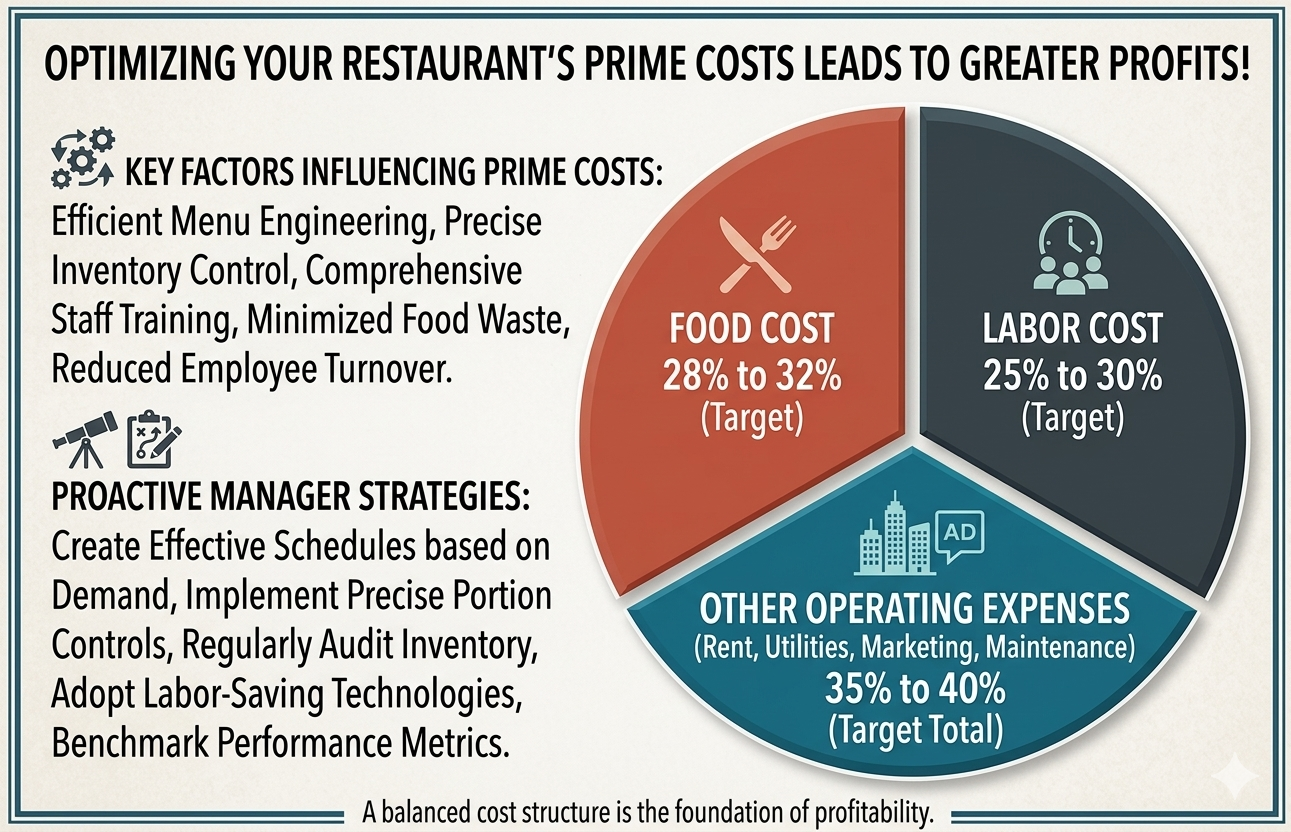
Prime cost combines the price of the goods sold and labor. Both of these are major areas that are able to move quickly in restaurants. According to the data provided by Bookkeeping Chef, prime costs account for around 60% of sales in restaurants.
Imagine the sales remained static, however the cost of production increased. This percentage by itself will not give the answer. It provides the person with an incentive to look into the issue.
Has the hourly wage increased? Was overtime a factor? Has the cost of food changed? A vendor invoice seemed unusually large? Does the mix of sales changed?
It’s better to discover the issue now rather before it gets worse.
Automate repetitive tasks
DIY bookkeeping doesn’t have to be done manually by transferring POS (point of sale) totals onto spreadsheets.
Automating bookkeeping for restaurants can assist with repetitive financial data movements. It connects to various systems, including POS and QuickBooks, payroll vendors, vendor platforms inventory management and recipe management, and tools for AP/payment.
Automating for the sake automation is not the objective.
This is done to reduce the manually entering data. It also keeps the financial records up-to-date so that owners are able to focus on studying data, not collecting it.
It is a totally different bookkeeping system for restaurant establishments. Technology takes care of the mechanical aspects and the owner stays engaged with the financial aspects.
You can ask better questions regarding P&L
A P&L can be a lot less intimidating when you stop treating it as an accounting test.
Begin by looking at the number of sales. Next, look at the expenses required to produce those sales. Compare the performance of food and beverages. Consider the labor. Continue to reduce your operating expenses.
Compare periods.
If sales improved but profit wasn’t, something else between those two lines changed. Ask what changed within the organization if food costs increased. Compare the staffing levels and sales activities in case labor percentages changed. Find any data that seems odd rather than just assuming that a restaurant has had a bad week.
Bookkeeping Chef sends monthly P&Ls with five working days. This allows owners to review recent results without having to wait for financial statements, which often arrive months later than the close of an operating period.
For owners searching bookkeeping restaurant solutions, speed is useful but understanding is the bigger objective.
DIY doesn’t have to mean Self-Employing Everything
There is no need to be your own full-time bookkeeper If you’d like to avoid handing over the whole financial responsibility to another person.
Owners can remain engaged without having to manually complete each accounting task.
It could be as simple as automatizing systems to ensure information flow, reviewing the monthly P&L and weekly reports regarding prime expenses or asking questions when something unexpected happens.
Restaurant bookkeeping services that specialize in restaurant bookkeeping can help proprietors understand the meaning of the reports by arranging the books and keeping them organized.
This doesn’t mean the bookkeeper is capable of performing every bookkeeping task.
An owner is able to have a discussion with the P&L regarding the company.
The aim is financial independence without reporting
Restaurants already generate massive amounts of information. Another dashboard might not prove beneficial.
If an operator is able to review the weekly prime cost report and realize that something is different, they can then open up their P&L to find out what is in need of an analysis.
Bookkeeping Chef’s strategy is a combination of financial support for restaurants daily reporting, and automated restaurant bookkeeping to achieve this.
Automate repetitive tasks. Review the prime cost each week. Learn to understand the same language as your P&L.
You don’t have to become an accountant.
It is essential to be aware of the financials of your restaurant prior to when you become an owner.